
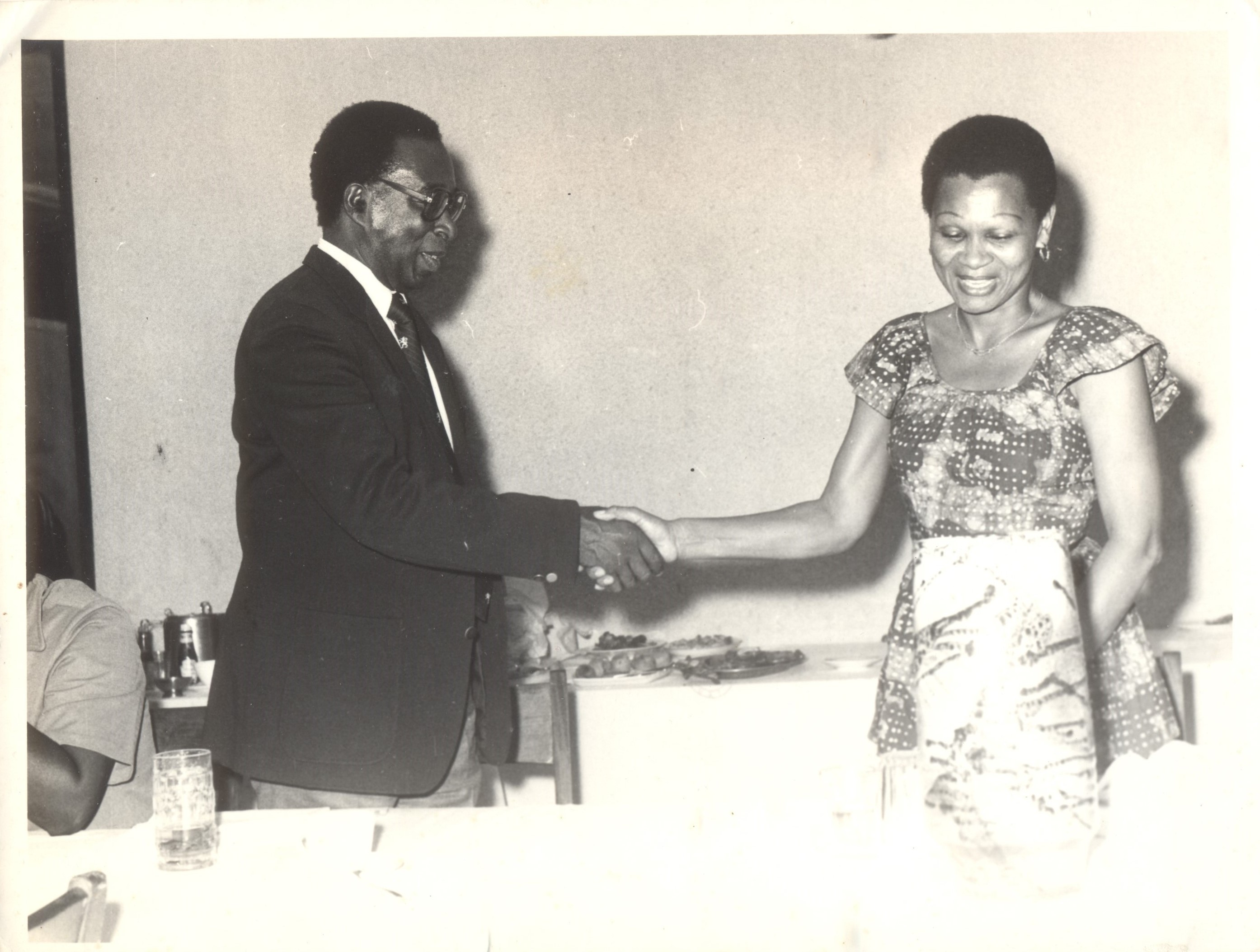
November 1985 marked an important milestone in the history of the then University of Science and Technology (UST), now the Kwame Nkrumah University of Science and Technology, Kumasi (KNUST), when the Secretary for Education, Ms Joyce Aryee, visited the University to reaffirm government support for what was then one of Ghana's most innovative academic programmes, the Book Industry Programme at the College of Art.
Correcting a national imbalance
Speaking after touring the facilities available for the Book Industry Programme on Saturday, November 9, 1985, Ms Aryee said the programme had been established to correct what she described as a serious imbalance in Ghana's publishing industry.
She observed that efforts to develop the country's book industry had, over the years, been hindered by a shortage of professionally trained personnel to manage the sector.
In addition, she noted that insufficient appreciation of the industry's contribution to national development, coupled with a lack of political commitment in the past, had delayed the introduction of specialised training.
"The Government attaches a great deal of importance to the Book Industry Programme because it has come to correct a serious imbalance in the publishing and book industry in the country," she said.
"No nation could hope to develop without books"
Ms Aryee endorsed a statement made by Mr. Appiah, leader of the Book Industry students, that no nation could hope to develop without books.
According to the newsletter, she said it was with that conviction that the PNDC Government had provided the political will for the introduction of the programme.
She stressed that national development depended on books because they enabled people to expand their knowledge in different disciplines, technical trades and professions.
Beyond knowledge acquisition, she said books also played an important role in creating symbols and shared ideas that facilitate communication.
Ms Aryee added that the publishing industry would help Ghana overcome some of its social and educational challenges by promoting a stronger reading culture.
Supporting curriculum reform
During the visit, Ms Aryee urged students enrolled on the Book Industry Programme and the College of Art to help develop locally relevant educational materials.
She encouraged them to produce symbols, images and illustrations for use in nursery and primary schools as part of the Curriculum Enrichment Programme recently introduced by the Ministry of Education.
According to her, locally produced educational materials would help instil positive values in children while strengthening Ghana's educational system.
Touring the College of Art
The Secretary for Education was conducted around the College of Art by Mr. F. T. Mate, Head of the Department of Design and General Art Studies.
She was accompanied by the then Dean of the College of Art, Professor E. K. Kwashie-Ansah, together with the Vice-Chancellor, Professor Frank Obed Kwami, the Pro Vice-Chancellor, Professor Kwabena Boakye-Yiadom, the Registrar, Mr. D. L. Andoh, and all the sectional heads of the College of Art.
Vice-Chancellor appeals for greater government support
During discussions with the Education Secretary, Vice-Chancellor Professor F. O. Kwami appealed for increased government support for the University.
He called for adequate financial and infrastructural investment to strengthen UST's academic, research and community development programmes.
Professor Kwami argued that universities specialising in science, technology and professional education should not be assessed solely on student enrolment.
He pointed out that institutions like UST required substantially greater financial investment because training students in professional, scientific and technical disciplines was significantly more expensive than in many other fields.
He therefore urged the Ministry of Education and the Government to consider UST more favourably when allocating resources.
Joyce Aryee responds
Responding to the Vice-Chancellor's concerns, Ms Aryee advised him to pursue the matter jointly with the country's other vice-chancellors.
According to the newsletter, she suggested that a collective approach would strengthen their case for improved government support.
Visit to the UST Printing Press
As part of her tour, Ms Aryee also visited the UST Printing Press, which provided practical training facilities and additional technical support for the Book Industry Programme.
The facility played a crucial role in equipping students with hands-on experience in printing and publishing, complementing classroom instruction.
Source: UST Newsletter Archives, Prempeh II Library, November 1985 – "Book Course Very Important to Government – Miss Aryee."
Story: Emmanuel Kwasi Debrah Photo: William Ablorh Osekre (1933–2015)


